
Angelika Housing in San Francisco is notoriously scarce and absurdly expensive. Since we have been living in this city, nothing has changed in that regard, and there is no improvement in sight. Apartments that fall under the city's rent control are particularly sought after, as they offer tenants special protection. We have been living in such an apartment for over 20 years now.
In general, rental apartments in buildings constructed before June 13, 1979, in San Francisco are subject to rent control. Single-family homes and condominiums are generally excluded. Rent control means that while the landlord can charge whatever they want for new tenants, they can only increase the rent once a year by a percentage set by the city; currently 1.4% (from March 1, 2025, to February 28, 2026). The previous year it was 1.7%. The landlord can increase the rent every 12 months, but is not required to do so. Missed increases can be applied later by adding up the allowed annual increases, but without compound interest.
How does the city arrive at the annually allowed percentages? They are based on the local consumer price index, specifically 60% of it. Every year that a tenant can avoid a rent increase is, of course, advantageous. The landlord must announce increases 30 days in advance. If the increase is over 10%, which can happen if there hasn't been a rent increase for several years, the notice period extends to 90 days. You can probably guess it. This year, we had a rent increase after eight years. Sigh.
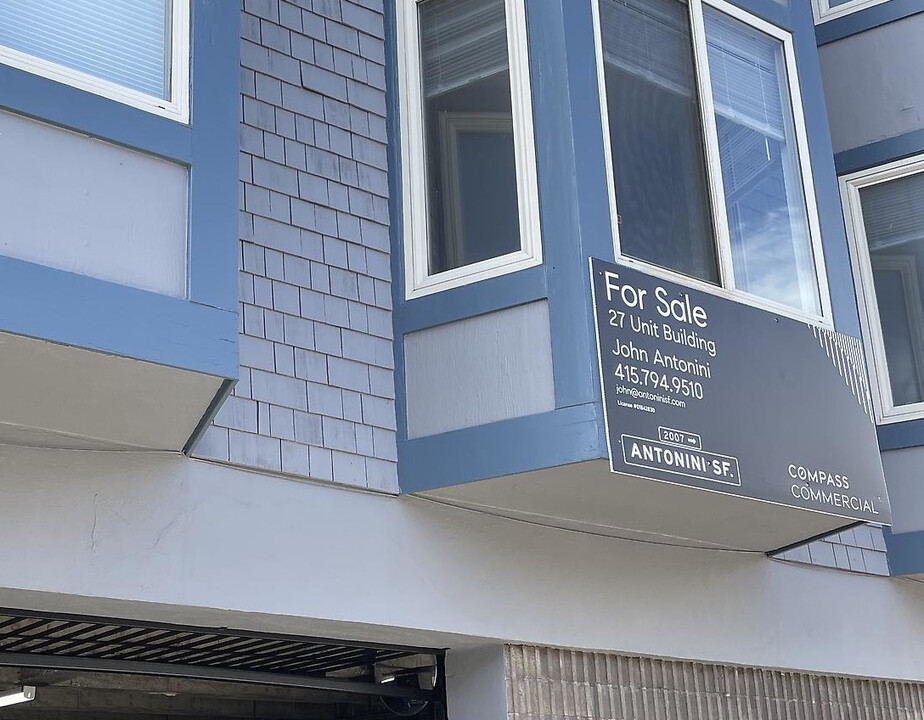
Hardly had we digested that when suddenly, in mid-June, we found a letter taped to our door. A local real estate agent announced that our building was to be sold, and that a viewing of the apartments would be necessary. In San Francisco, it is required that property viewings be announced at least 24 hours in advance. The letter also included a questionnaire and explanations of our tenant rights. More on that shortly. We had feared and anticipated the sale because our landlord Gus, who had built the house himself in the early 70s, had passed away some time ago at well over 90. Gus had been very attached to the house and had always kept an eye on things even in his old age. A very interesting man, our Gus. In his very young years, he moved from Switzerland to San Francisco and actually lived the American dream, as he bought land and built houses, and was very successful at it. Several years ago, he had transferred the management of our house to one of his daughters. And we knew: She would sell the house as soon as Gus would no longer object.
In my opinion, whoever buys our apartment building must be a bit crazy because nothing has been done to the house for years. For example, our elevator regularly breaks down, and the water pipes in the garage keep leaking, creating huge puddles. But Michael always says that in the end, everything is a matter of price.
Now tenants in a building with rent control enjoy extended rights when the building is sold. The buyer cannot simply change existing rental agreements or evict tenants, and the rules regarding rent increases remain in place. Tenants generally cannot be forced to fill out and sign a so-called estoppel certificate. What exactly is behind the term "estoppel"? Generally, "estop" means "to prevent" or "to prohibit." Basically, the form spells out the current rental conditions. When did the tenant move in, what deposit did they pay, is there a parking space and if so, where is it, or has the tenant made any changes or improvements to the apartment and paid for them themselves? Once this form is filled out and signed by the tenants, it is considered binding, and the tenants cannot later claim or sue for something different. However, this also applies if something is not mentioned on the form. Therefore, legal experts debate whether it is advantageous or disadvantageous to fill out this form. If the rental agreement states that it must be filled out, there is no way around it.
Since the estoppel also lists things that were only agreed upon verbally, which the new landlord should be aware of so that they continue to be valid, we felt that the advantages outweighed the disadvantages, and we dutifully filled it out. Another important form that should be completed concerns the question of whether one belongs to a "Protected Class." Tenants who fall under this specially protected category cannot be terminated due to personal use by the owner in the event of a change of ownership. These include: 1) Tenants aged 60 and over who have lived there for at least 10 years. 2) Tenants with disabilities who have also lived there for at least 10 years. 3) Tenants with severe, life-threatening illnesses who have lived in an apartment for at least five years. Approximately half of the tenants in our building fall into these categories.
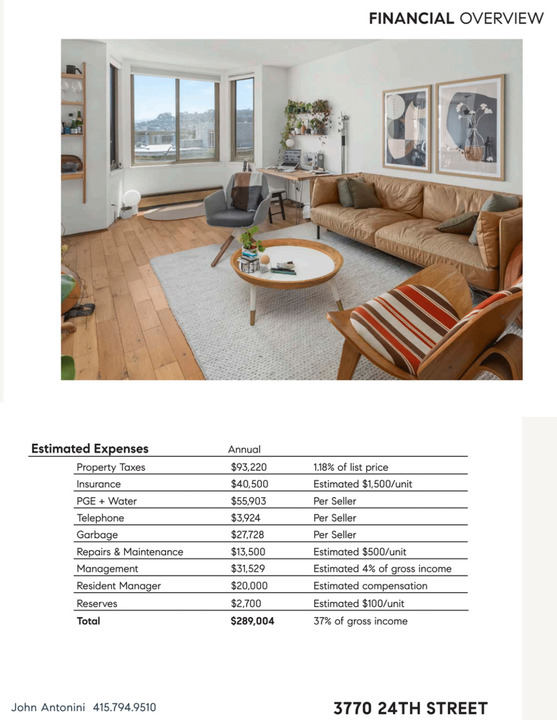
When a house is for sale in the USA, a process called "staging" takes place, which means the homes are adorned with stylish furniture and impressive, enhanced photos are taken to help sell the house more quickly and at a higher price. In an apartment building where people live, this is naturally a bit more challenging, but the realtor still did their best. Our neighbor's apartment was photographed, and some general beautification attempts were on the agenda. For example, in our entrance lobby downstairs, there had been this wood paneling on the wall that had probably been there since the house was built. It was rigorously torn out, and the lobby was painted in such a bright white that I'm always quite dazzled now when I step through the front door. The building walls were also cleaned with a high-pressure water jet. However, we were not informed about this, so suddenly the dirt sprayed through the cracks of our apartment door because it no longer closed properly. Thankfully, we were home and could immediately cover and clean everything with towels.
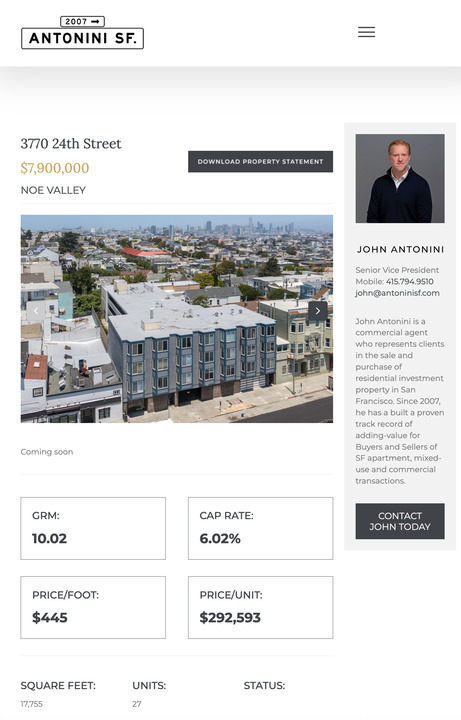
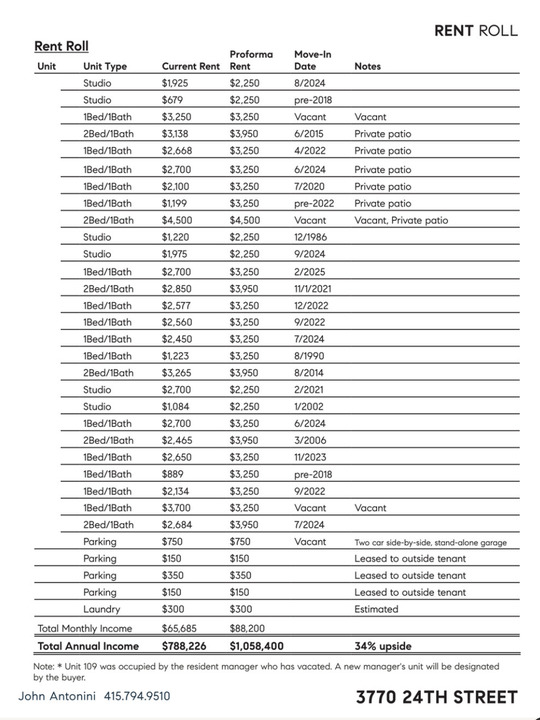
But how much should our house cost now? A mere 7.9 million dollars. For San Francisco, that's not even that much, since the smallest "doghouse" here now costs over a million. To let potential buyers know what rental income they can expect, the realtor creates a so-called "Rent Roll" list, which is available online. It not only lists every single apartment with its number but also how much rent each tenant pays, how long they've lived there, and what the rent would be if the apartment became vacant. Because only in the event of a move-out can the landlord raise the rent to the current market price, even for rent-controlled apartments. Privacy is less of a topic in the U.S. than in Europe. In our building, rents range from 679 to 4,500 dollars per month. This depends partly on the size of the apartment and partly on how long the respective tenants have lived here. Some of our neighbors moved in when the building was completed and accordingly pay very little.
In any case, the whole situation is incredibly annoying despite all assurances. Someone constantly wants to come into our apartment. Recently, there was another note on the door saying that repair work would be carried out next week. And who knows who will end up buying the building. For the landlord, it's naturally most lucrative if the long-term tenants move out, as this allows the rent to be adjusted to the market rate. We've already heard horror stories about the methods used to push tenants out. And I definitely don't want to live on a permanent construction site. But moving isn't an option either, as a comparable apartment would easily cost twice as much.