
Angelika Paper is known to be patient, and a lot of printer's ink has been used in recent months on the Iraq crisis. There have been analyses by experts, commentaries in various newspapers, discussions, debates, and quite a bit of polemics, not to mention the systematic manipulation of public opinion, especially on this side of the Atlantic.
Just recently, I read in an article by William Greider in the magazine 'The Nation' (Rundbrief 12/2002). According to a survey by the New York Times and CBS News, 42 percent of respondents believed that Saddam Hussein was personally responsible for the attacks on the World Trade Center and the Pentagon. The propaganda is having an effect. Many of you (and by the way, countless Americans as well) are rightly asking: Is Bush crazy? Why is he doing this? Why is he acting like an imperialist warlord?
Not exactly easy questions to answer, but I'll try an analysis. A cultural difference between Americans and Europeans is that Americans generally approach life quite pragmatically. Problems are solved as quickly as possible and often in a rather unconventional manner. In doing so, Americans don't always necessarily weigh the pros and cons in detail. The goal is to get the problem out of the way. Long analyses are unnecessary; action is required, and the associated risks are accepted. If the problem-solving approach is wrong, the strategy is simply changed.
Diplomacy, on the other hand, requires patience. Bush has little of it. He sees Saddam Hussein as a problem that he wants to get out of the way. Additionally, every American is often instilled with a rather naive worldview from childhood, with the motto: America is the best country in the world with the greatest democracy, only Americans live in true freedom, etc. To put it bluntly: America is good, and one should be skeptical of the rest of the world.
Of course, not every American thinks in such a one-dimensional way, but unfortunately, Bush operates within the black-and-white, good-or-evil mindset. He displays a missionary zeal in doing so: The good (in his opinion, American values and democracy in the American style) must first be brought to Iraq. And like many missionaries before him, he becomes obsessed with an idea and believes that any means justifies the end. His almost fundamentalist-tinged belief does the rest.
Bush considers himself one of the so-called "Born-again Christians," who interpret the Bible strictly and very literally. In America, "Born-again Christians" are typically extremely right-leaning believers with strict moral views. Incidentally, before his conversion, Bush was regarded as a right-wing bon vivant who was very fond of alcohol. That was a long, long time ago!
And last but not least, a few remarks about the rift between America and Germany, as many of you have expressed concern in your letters to us -- whether we as Germans can even dare to go out on the streets in the U.S. anymore?

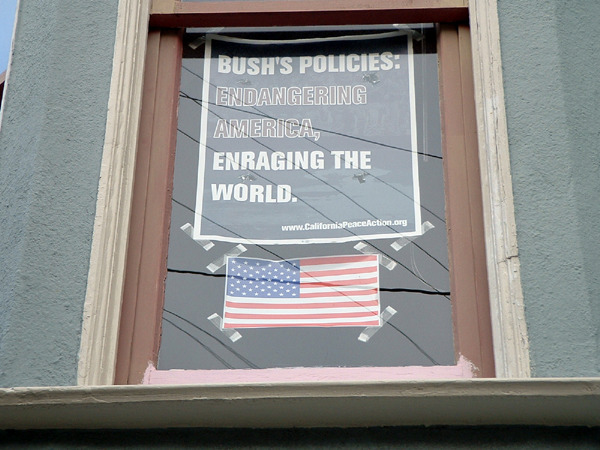
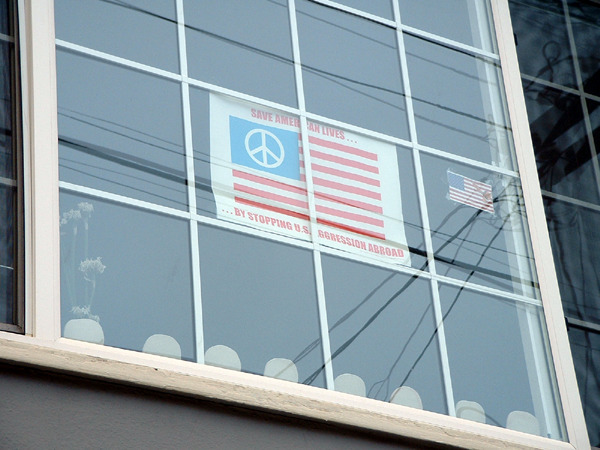
As I said, we live in liberal San Francisco, and the people here are closer to the views of the Germans and French on the Iraq crisis than to their own government. No one here supports Bush's policies. In San Francisco, the population is protesting against the war just like in Europe. When I was in the photography class' darkroom last week, an American woman told me that I should be glad to be German. She, on the other hand, said she was now ashamed to be American. She meant it quite seriously. So, be kind to the Americans; not all of them want to be lumped together, and not everyone stands firmly behind Bush.