
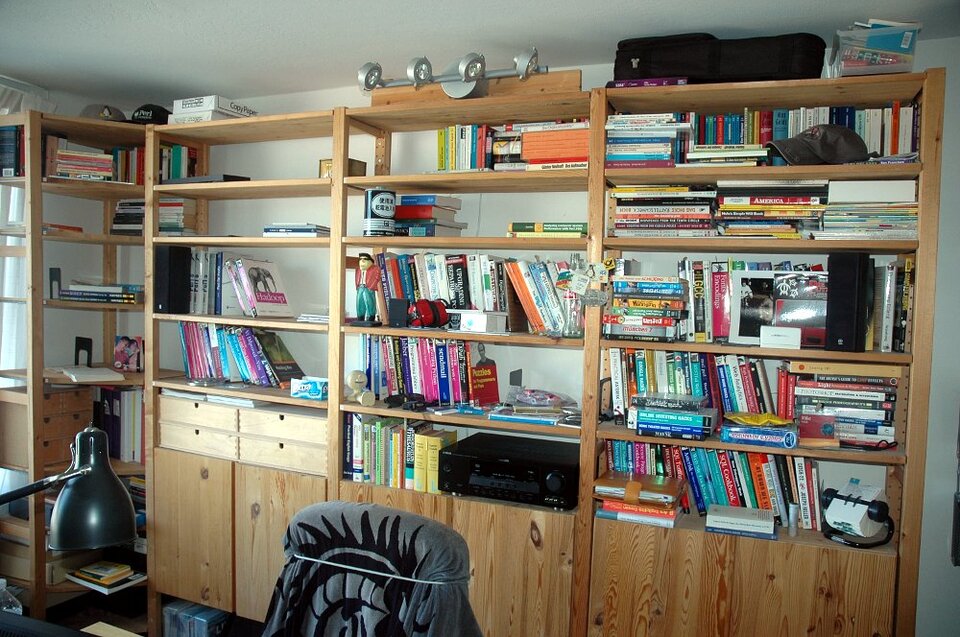
Michael For decades, I've been accumulating paper books at home. This was especially wasteful with computer books, which were taking up space on my shelves for years to come after I had read only a few relevant pages in them and them put them aside. But thanks to the eBook revolution, which Germany is only beginning to see now with a few years of delay compared to the U.S., I came up with the idea to chop up my entire library, digitize the books by scanning them and put them online for me to read them wherever I might roam. Regardless of whether I'm waiting at the supermarket register or relaxing in a comfy folding chair at the beach, I can always access any of my 450 books and read a few pages if I feel like it.
For a while, I've been buying new books digitally at Amazon for the Kindle reader, a format that can be consumed by all kinds of tablets and mobile phones as well. My scanned books are available as PDFs on my Google Drive, and are no longer taking up space on my shelves. One of the reasons I finally took the plunge was that airlines nowadays are charging exorbitant fees for checked-in luggage. I'm no longer willing to pay extra for carrying 4 pounds of paper books on a trip. Instead, I'm now simply carrying an iPad, and have everything I've ever owned with me at all times and can read it whenever I want.

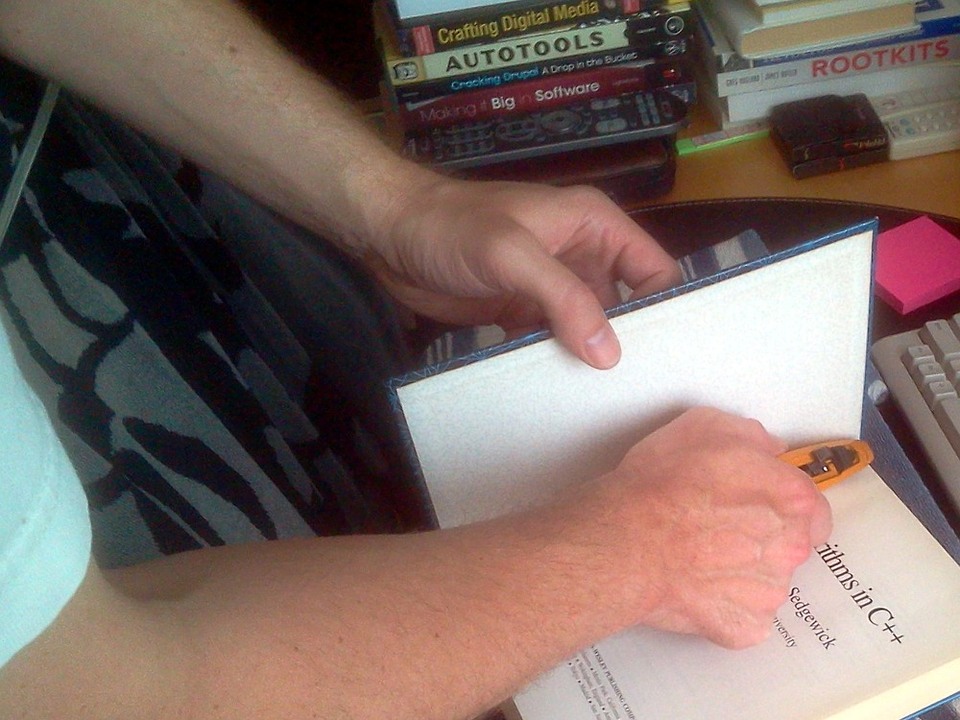
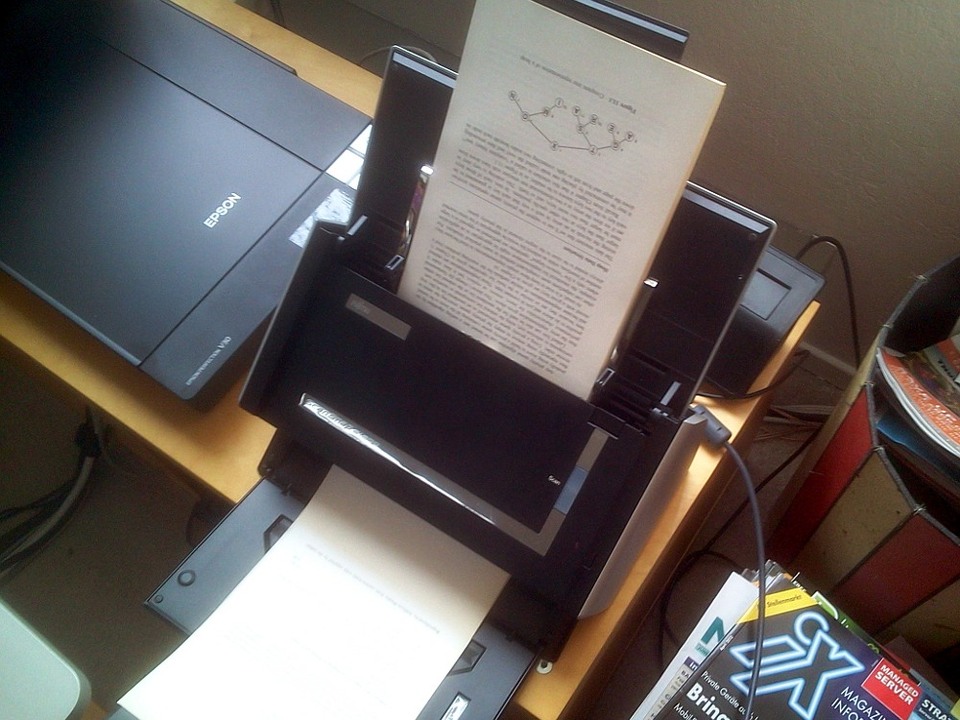
To digitize a book, I first cut off the book's cover with a box cutter. This exposes the plain pages, which are still glued together at the binding. This blob then goes into a tool called a guillotine that I purchased on Ebay for $150. Its vise holds the naked book firmly, while its sharp blade comes down and cuts the pages loose. A Fujitsu S1500 scanner's single sheet feeder then pulls the pages in individually and creates a PDF that I push to my Google Dive cloud storage space, which I can access from anywhere via an Internet connection.
In Figure 5 you can see how a digitized paper book from my former library now shows up on my new iPhone 5. It's readable on a small display, and even easier to digest on a device with a bigger screen size, like an iPad oder a Android tablet. The remainders of the chopped up paper books all went to the recycling bin.
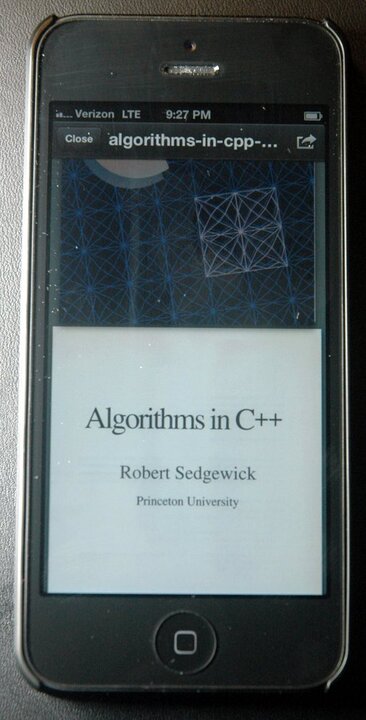
Recently, I was waiting for my turn at my barber. I used the idle time to think about a computer problem at work, had to look up an algorithm and quickly took out my mobile phone to download a chunk of a digitized paper book in my collection. Unbelievable, what times we live in!