
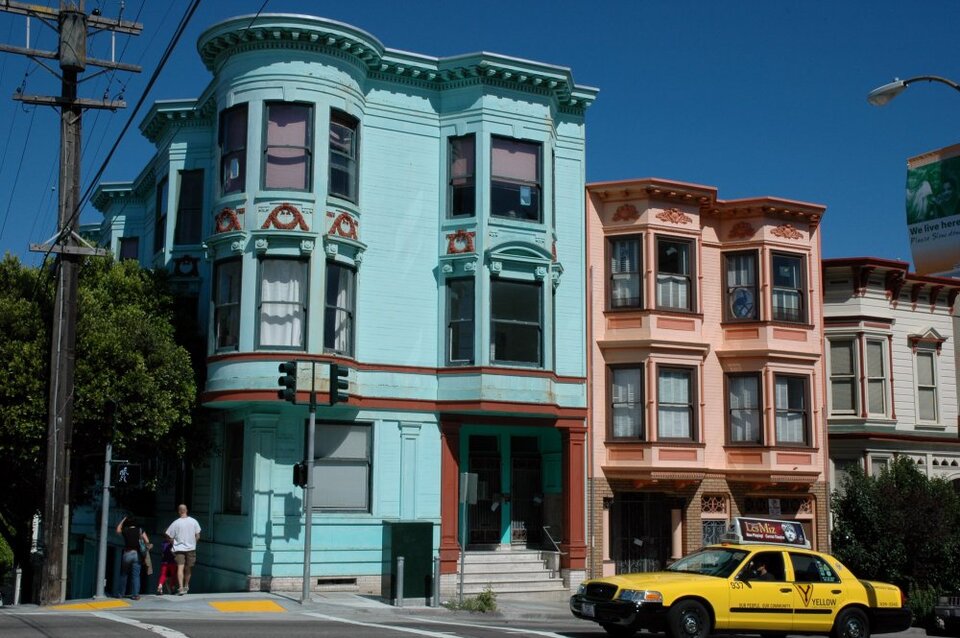
Angelika: You already know it: The neighborhood we live in is called Noe Valley and it has become one of the most popular residential areas in San Francisco. And although we have mentioned it in one of our newsletters from time to time and every somewhat better travel guide now lists it as worth seeing, we want to share a few things with you that hopefully aren't in the "Lonely Planet" yet.
San Francisco is known for its unique neighborhoods, and Noe Valley is no exception. The popularity of the neighborhood can also be seen in the housing prices. According to our neighborhood newspaper "Noe Valley Voice," the average price for a single-family home in April 2005 was a hefty $1,188,625. In May 2005, the average rent for a one-bedroom apartment was $1,489, while two-bedroom apartments averaged $2,286.
At first glance, the many Victorian wooden houses stand out, as the great earthquake of 1906 spared Noe Valley: The neighborhood is situated on rocky ground, and the fires following the quake were stopped before they reached Noe Valley. A solitary fire hydrant at Church St. and 20th St. provided the life-saving water and was therefore painted gold. We are also blessed with plenty of sunshine, as the fog is kept at bay by the Twin Peaks hills. Geographically, Noe Valley is in good and interesting company, as it is located between the Mission, the South American neighborhood, and the Castro, the stronghold of the gay movement.
What we appreciate most about this neighborhood, besides the countless restaurants, small shops, and good public transportation, is the cozy, family-like atmosphere with an international flair and almost without the American monotony (unfortunately, there is already a "Starbucks" - sigh). For example, when we go to Michael's favorite restaurant "Savor" on 24th St., which is known for its savory and sweet crepes, one of the waiters greets us like old friends.
Even with the owner of the Thai restaurant "Swatdee Thai," we always start with a chat about everything under the sun. At "Hamano," one of our favorite Japanese restaurants located on Castro St., I actually managed to snag a table for four in no time, despite the long line of people ahead of us, which would have meant at least an hour's wait. The owner recognized his loyal neighborhood customers and let us go ahead. Unfortunately, he has since sold his restaurant, but the place continues to operate under new management.
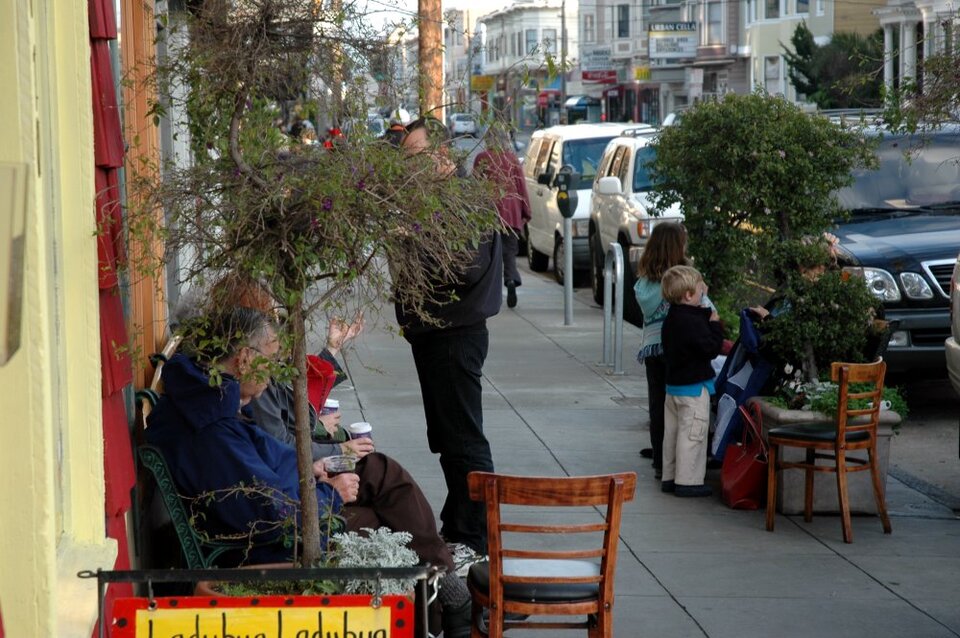
You can best capture the neighborhood's vibe at "Martha's": Not only do they serve good coffee, but customers also lounge around philosophizing on chairs and benches in front of the cafe in the sun. By the way, "Martha's" is still family-owned. However, there are now several branches in San Francisco. But Martha, originally from Nicaragua, opened her first coffee shop in 1987 on 24th St. in Noe Valley, and coffee lovers like me, who need their daily dose of caffeine, occasionally encounter the real Martha in her store.
An exotic shop by American standards is hidden behind the cheese shop "24th Street Cheese Company," where cheese enthusiasts can find a selection of cheese entirely in the European tradition. The phenomenon that in many parts of America, you can only find packaged "Cheddar" cheese and maybe a Camembert has always fascinated me, especially since there is no shortage of milk-giving cows here. Amusingly, the owner of the cheese shop is Asian. He is always terribly exasperated when American tourists from non-cheese regions come into the shop recommended by travel guides and then leave without buying anything. However, cheese is clearly trending, at least in San Francisco and the surrounding area. North of San Francisco, there are now several small cheese dairies (e.g., around the Point Reyes area). However, the prices for cheese are so steep they'll make you cry.
Regarding cows: they were once grazing in Noe Valley, as the land was part of the "Rancho de San Miguel" farm and was, back in the day, located on the outskirts of the city. The owner had the melodious name Jose de Jesus Noe. By the way, Noe is pronounced No-ee. For a short time, Noe Valley was also called "Horner's Addition," because in 1852, John Horner bought parts of the farm from Mr. Noe and began diligently building houses. However, the boom only occurred when the cable car started running from Market/Castro St. to the steep 26th St. in 1887. Today, a bus runs there, and the cable car operates elsewhere.
In the late 19th century, immigrants, mainly from Ireland, Germany, and Italy, arrived. The neighborhood developed into a traditional working-class district. Many Germans worked in butcher shops, as the long-time residents of the neighborhood can still recount today. The Irish pub "The Dubliner" and the German store "Lehr's" in Noe Valley bear witness to these roots. "Tuggey's Hardware," a store that sells all kinds of tools and screws, has existed since 1900, for example. And in our building, some people have been living here for over 30 years. "Rent Control" makes it possible (Rundbrief 08/2000). The Republican real estate agent on 24th St. has been delighting the neighborhood with his conservative views for over 50 years.
When the internet companies started booming a few years ago, many dot-commers flocked to Noe Valley because, with their high salaries and stock options, they could suddenly afford anything and drove the prices in the neighborhood even higher. This happened much to the chagrin of the residents who had been living in Noe Valley for decades. Since the bubble burst, everything has calmed down a bit.
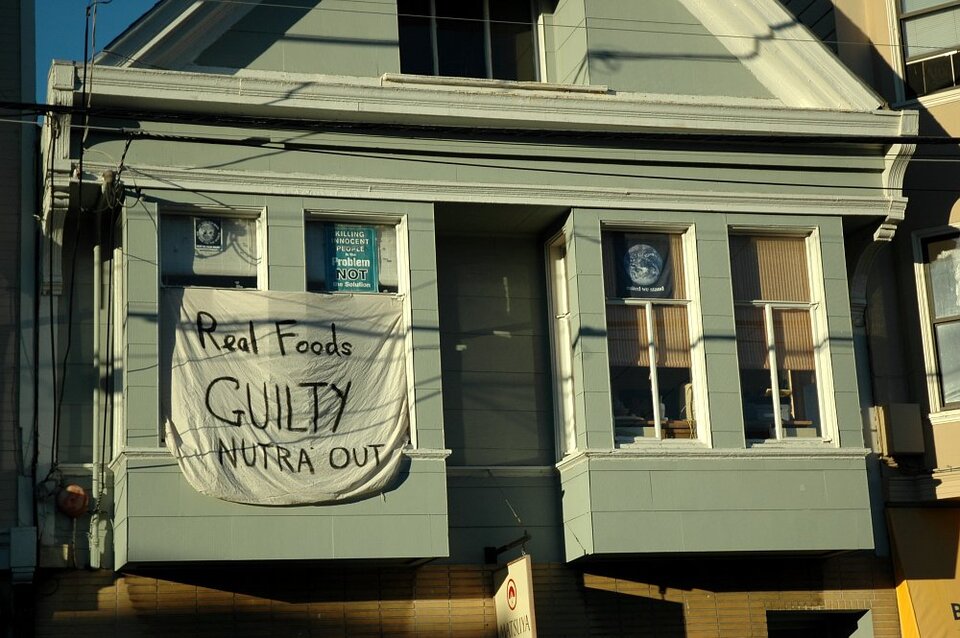
Otherwise, a liberal spirit is blowing through the neighborhood, and the residents are politically and socially engaged. For example, when our organic supermarket "Real Foods" was taken over by a company in Utah and suddenly laid off all employees in the fall of 2003, there were protests. The official reason given was that renovations were planned for the store. The suspected real reason: the employees had wanted to unionize. Almost two years later, no renovations have taken place, but the very active community group "Friends of Noe Valley" organized a weekly market that takes place every Saturday from 8 AM to 12 PM, so that people in the neighborhood can continue to buy organic vegetables and fruits.
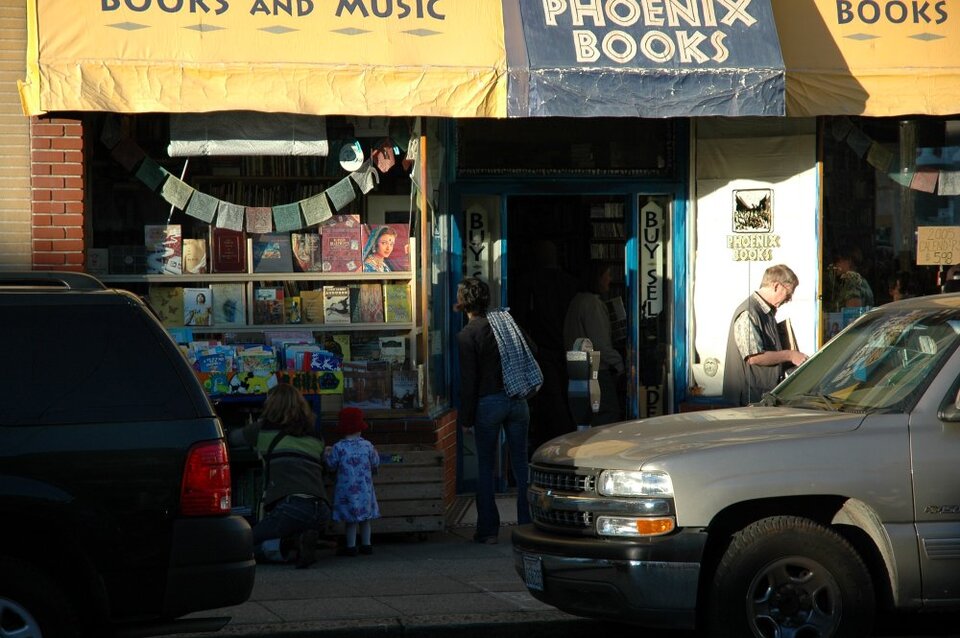
Or when the independent bookstore "Cover to Cover" faced closure in the summer of 2003 due to financial difficulties, enthusiastic book lovers from Noe Valley helped it get back on its feet by finding a smaller, more affordable store in the neighborhood. Loyal customers committed to spending $25 in the store every month. Forty people pooled together and provided a loan totaling $200,000 to pay off outstanding debts and restock the store. You wouldn't have thought that something like this could happen in capitalist America.
Funnily enough, it was more or less by chance that we settled in this neighborhood back then. We didn't know Noe Valley at all at the time. However, Michael wanted to live in a hilly area that reminded him of the series "The Streets of San Francisco." Well, thanks to "The Streets of San Francisco!"
Greetings from "Noe":
Angelika und Michael