
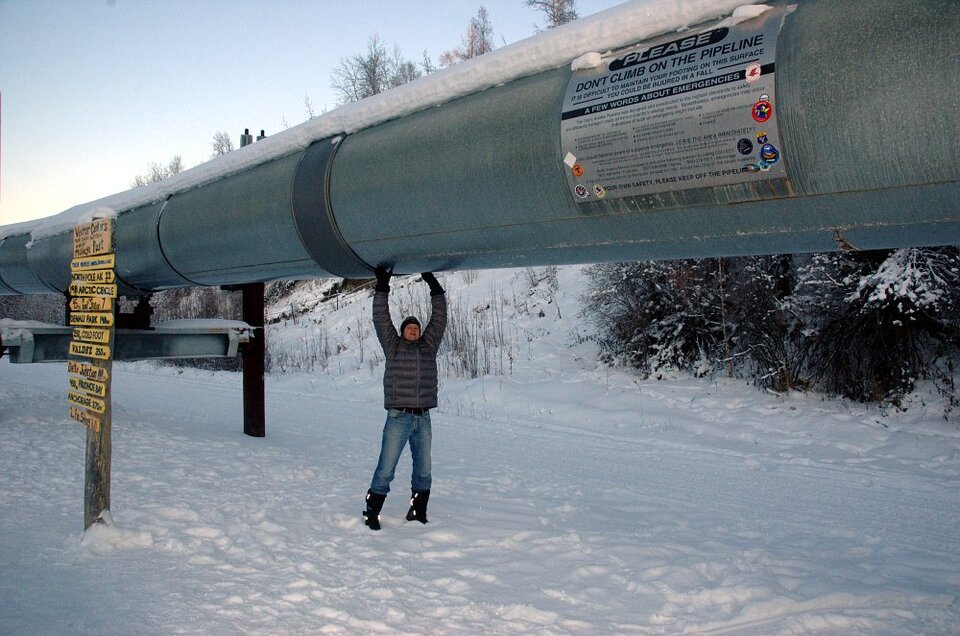
Angelika Alaska is not only blessed with natural beauty but also rich in mineral resources. The discovery of oil in Prudhoe Bay by the end of the 1960s brought the state an unexpected windfall and supports its finances to this day. However, some environmental sins have also been committed.
One of the most controversial projects is considered to be the construction of the Alaska Pipeline, the approximately 1,280-kilometer-long oil pipeline that runs from the mostly frozen Prudhoe Bay in the north across Alaska to the ice-free port of Valdez. On one hand, the pipeline is regarded as a masterpiece of engineering, as it not only crosses several mountain ranges and rivers but also stands mostly on the widespread permafrost ground in Alaska, which remains frozen both in summer and winter.

On the other hand, the pipeline has always been a thorn in the side of environmentalists and the native Indians. Environmentalists were concerned about the intrusion into Alaska's vast untouched landscapes, and they feared potential environmental damage from leaks in the pipeline, as well as negative impacts on wildlife. Animal and environmental activists were particularly worried about the survival of the caribou herds, as they believed that the pipeline would, for example, shorten their traditional migration routes and thus make hunting the caribou easier.
Native Americans complained that the pipeline ran for long stretches over territories that rightfully belonged to them and demanded compensation. After years of negotiations, President Nixon finally signed the "Alaska Native Claims Settlement Act" in 1971 to settle the dispute. The Native Americans ("Native Alaskans") received approximately 963 million dollars and 180,000 square kilometers of land, and in return, they allowed the construction of the pipeline.

Politically, the oil crisis of 1973 helped to push through the construction of the pipeline. The groundbreaking took place in March 1975, and the construction of the entire pipeline was completed in just over two years. The project brought about a gold rush atmosphere. Cities like Fairbanks and Valdez experienced not only a significant population increase but also steep price hikes, especially for houses and land. Wages of construction workers were above average due to the harsh conditions, which led to an increase in wage levels in other industries as well.
Long-term, the construction of the pipeline and oil production completely eliminated the state income tax and sales tax in Alaska. Alaska receives enough money from the oil industry to forgo these taxes, which are common in many other states. Additionally, every resident of Alaska receives an annual dividend from the Alaska Permanent Fund each October (Rundbrief 05/2006). The only question is what will happen when the oil sources run dry, because production has already been reduced and will steadily decline over the next 10 years.
Due to the permafrost, the pipeline runs largely above ground, as permafrost is not only as hard as concrete, making it somewhat difficult to dig deep into the ground, but it also has the tendency to partially thaw when the ground warms up too much. If hot oil is pumped through the pipeline, the ground beneath softens and causes the pipeline to sink. Therefore, the pipeline is built in sections on hydraulic stilts, which are designed not only to dissipate heat but also to compensate for ground instability.
In Fairbanks, we visited a section of the pipeline that runs conveniently along the freeway. Despite the constant fear in Alaska that some lunatics might blow up the pipeline, everything was freely accessible and there was not a person in sight.