
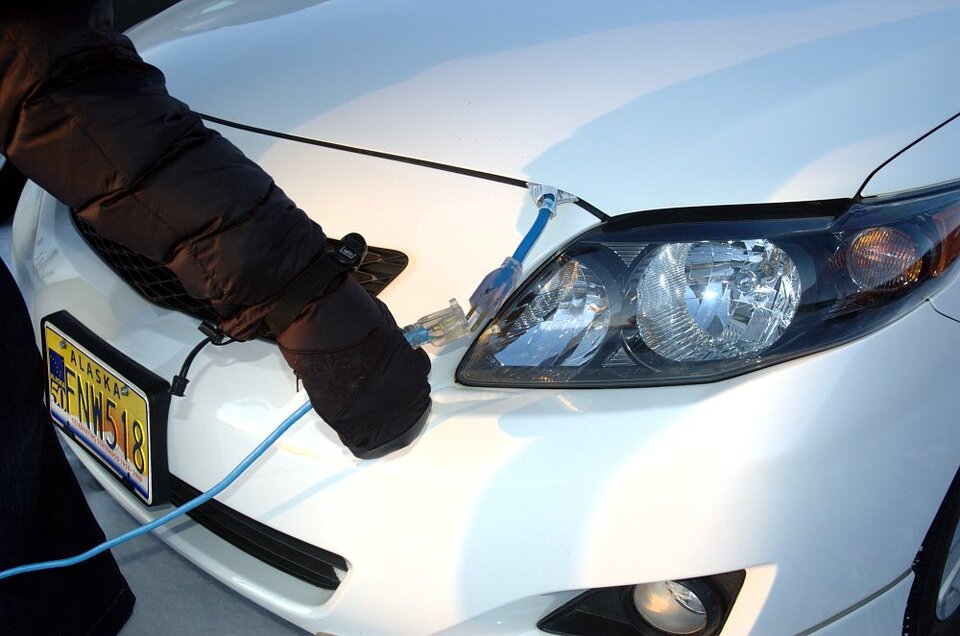
Michael At temperatures below minus 20 degrees celsius (0F), a cold engine often has trouble starting, and that's why in Alaska, a power cable from a so-called "plugin" sticks out of the car's hood. This cable leads to a heating element in the engine compartment, which keeps the vehicle's radiator nice and warm. If the car also has a fairly new battery, it will start instantly, even at minus 50 degrees.

Car owners plug the connector into a regular power outlet using an extension cord that is carried along. The flexible insulation of the cable can withstand even the lowest temperatures without breaking, and the car rental company charges a $35 penalty fee if it is misplaced.
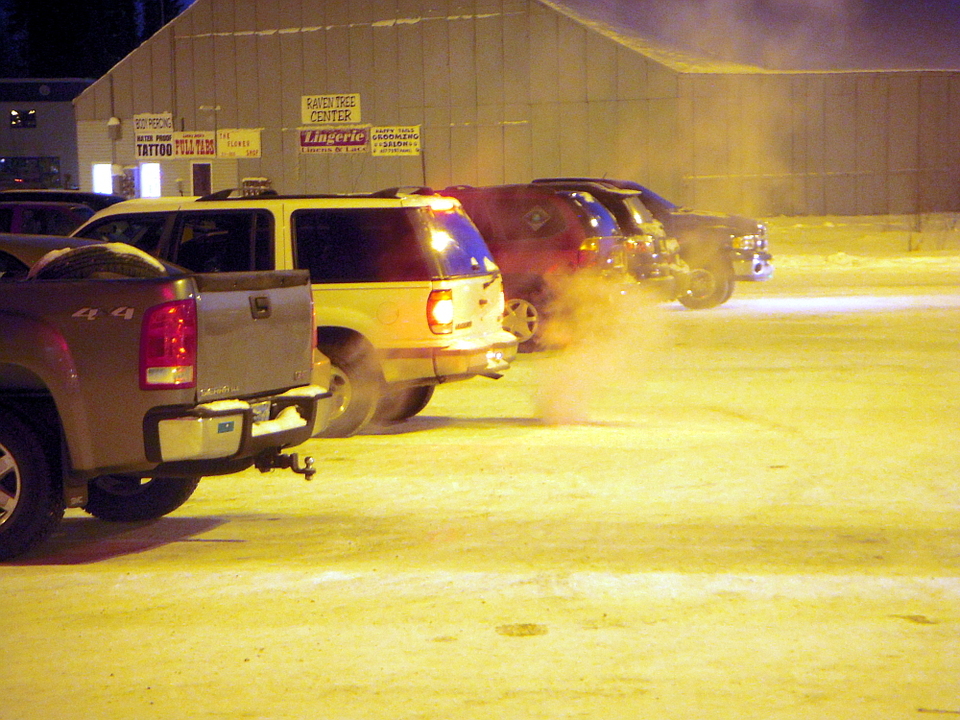
However, not every parking lot offers the required power outlets. When we were shopping at the "Fred Meyers" supermarket on a cold evening, about one-fifth of the customers simply left their engines running during their shopping trip. In the book Real Alaskan Living, the joke goes that you can recognize a true Alaskan by the fact that they don't turn off their car engine during the entire month of January!
In the same book, it says that you should never admit that you have only recently been living in Alaska, because then the seasoned, tough guys will call you a Cheechako (pronounced "chee-chacko," with the emphasis on "chack"), which means a newcomer or greenhorn. The word is from the Chinook Jargon, and the term is borrowed from a linguistic mishmash that emerged in the early 19th century in the northwest of what is now the USA, which the first settlers used to communicate with the indigenous Native Americans living there at the time.
Goodbye, until the next newsletter, or "klahowya" ("kla-hau-ja"), as it's called in Chinook English!
Angelika & Michael