
Michael In the USA, political parties do not receive money from the state; instead, they finance their election campaigns entirely with donations from party supporters. To prevent powerful industrial magnates from directly bribing parliamentary representatives, the party donation law limits contributions from individuals to individual representatives to $2,500.
Maximum amounts for party donations. vary depending on the donor organization and type of donation. To exert influence on politics with more substantial financial resources, interest groups nowadays hire lobbying firms that maintain close contacts with influential politicians. The lobbying firm then acts as an intermediary between the interest group and parliamentarians, rallying citizens on one side who each donate $2,500 to the legislator, and in return, the politician promises to vote in line with the interest group's wishes in congress.
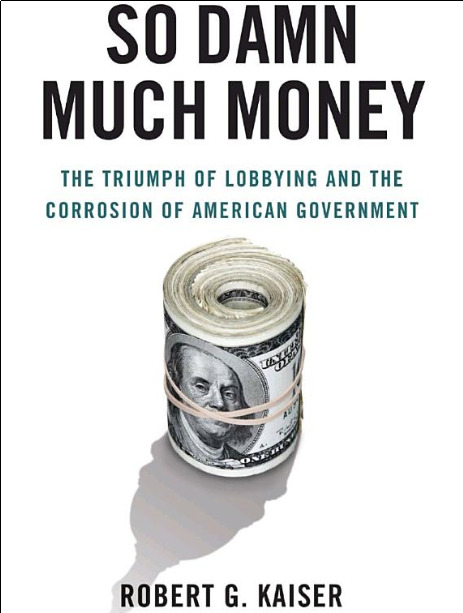
Groups of financially strong individuals form so-called Political Action Committees (PACs) on the donor side, which organize fundraisers and pool their money. A look at the historical development of PACs in America is worthwhile. In the book "So Damn Much Money", author Robert Kaiser tells the dry story in exciting ways. There were a total of 608 PACs in 1974, which donated 12 million dollars. Two federal elections later, in 1982, there were already 3,371 PACs that collectively poured 83 million dollars into the election campaigns of their favorite politicians.
Both in the Senate and the House of Representatives, members vote on proposals in two different committees. First, the proposal itself is debated, and if the representatives agree on its implementation, a second committee decides who will receive the tax dollars from the taxpayers. In 1978, the clever lobbying firm Schlossberg-Cassidy recognized a loophole in this two-step process. They found an already approved proposal for the establishment of a national nutrition research center and intervened in its second phase, the "appropriation" (allocation of tax dollars). Through personal connections with the voting committee members, the lobbying firm managed to redirect the funds so that they did not go to the originally intended recipient but instead to a client of the lobbying firm, the private university "Tuft."

Nowadays, this trick is almost indispensable in legislation under the term "earmark." In the first phase of voting, which concerns the matter itself, representatives are already wheeling and dealing like there's no tomorrow about who will actually receive the funds from the state treasury if the proposal is approved. This precondition is then attached to the proposal as an earmark. A representative signals in preliminary negotiations that they will vote in favor if, for example, an institution from their state is assured a portion of the funds in the second phase. Senators represent their respective states, and redirecting federal funds back to their home state is known as "bringing home the bacon." Voters simply expect this from the representatives of their state.
The lobbying firms that mediate between interest groups and politicians charge the interest groups a flat fee through so-called monthly "retainers." A solvent client pays about $40,000 per month without the lobbying firm having to account for hours worked or services rendered. In lobbying circles, $60,000 per month is referred to as a "bonanza," and in "So Damn Much Money," there's even a story of a Native American group that was so concerned about their casinos that they shelled out $150,000 per month to ensure that their tax exemption (Rundbrief 02/2008) wouldn't be repealed through any new legislation.

The term "to lobby" is said to originate from the entrance area of the "Willard Hotel" in Washington DC. During his presidency (1869 -- 1877), the then-President of the United States, Ulysses S. Grant, frequently stayed at this hotel, and hordes of businesspeople who wanted something from him would loiter in the hotel lobby to quickly present proposals to the President when he arrived or was about to leave.
If a politician wants to win an election these days, they need to run as many TV commercials as possible. The exorbitant costs for these are most easily covered by donations from interest groups, to whom the politician, once in office, owes a favor or two, along with the mediating lobbying firms.

So, in American politics, a thriving economic cycle is created: Interest groups pay lobbying firms, lobbying firms provide politicians with much-needed campaign donations, and politicians vote in committees in line with the interests of these groups. When a politician leaves office, it's high time for them to start making serious money. Their friends in the lobbying firms are happy to secure them a well-paid job. A congressman earns less than the CEO of a software startup, but a successful lobbyist can rake in a few million per year.
The loser in this apparent win-win situation is the tax paying citizen. Urgently needed reforms, such as those in healthcare, immigration law, or environmental policy, never get off the ground because wealthy interest groups want to cement the status quo and enforce it with money. Incidentally, a different trend can be observed in Germany: for the leading members of the Bundestag, securing the next re-election has now become far more important than properly governing the country.