
Michael In early September, we spent a long weekend in Las Vegas. That may sound crazy to you, because Las Vegas has become quite a tourist trap, at least around the so-called "Strip." But since we met there many years ago, Las Vegas has a special meaning for us, and we drop by from time to time. As old hands, we naturally know the place like the backs of our hands, book hotels nobody else books, and shop at ordinary grocery stores like the locals. For meals, we head to the Arts District or downtown, far from the Strip and its casinos. Off the beaten track, prices in Las Vegas are roughly comparable to San Francisco, and you actually get excellent food and service for your money.
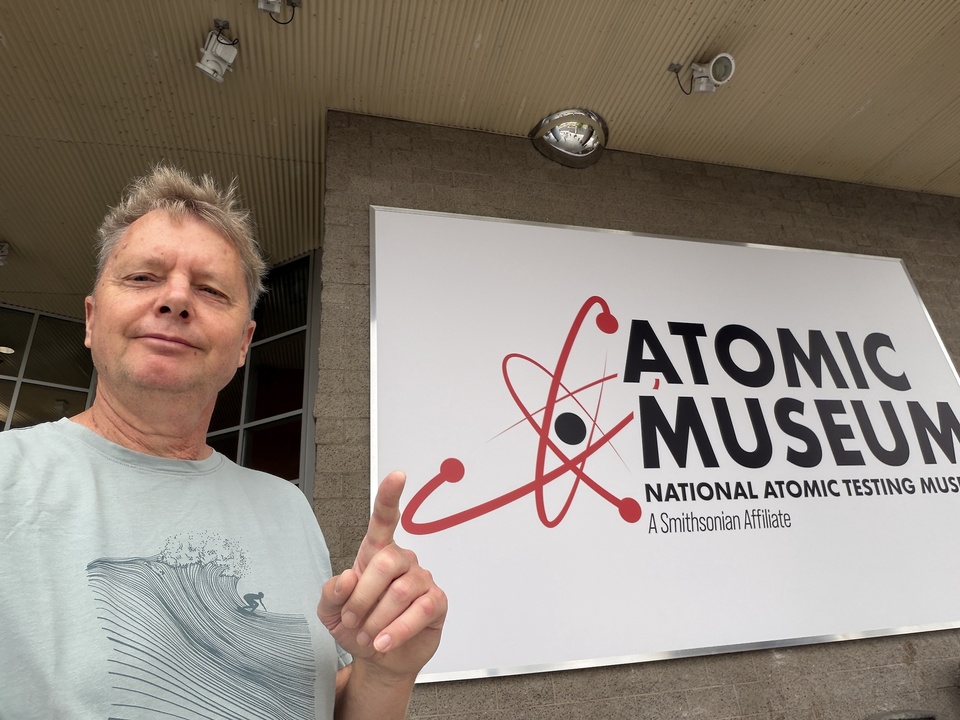
Las Vegas also has some offbeat museums. We have already visited the "Mob Museum" (gangsters such as Al Capone and FBI bigwigs such as J. Edgar Hoover) and the "Neon Museum" (Rundbrief 12/2019) with its huge old neon signs. This time I had the brilliant idea of visiting the "Atomic Museum." The admission price of $28 per person was pretty steep, but at least I, as a longtime technology buff, got my money's worth.
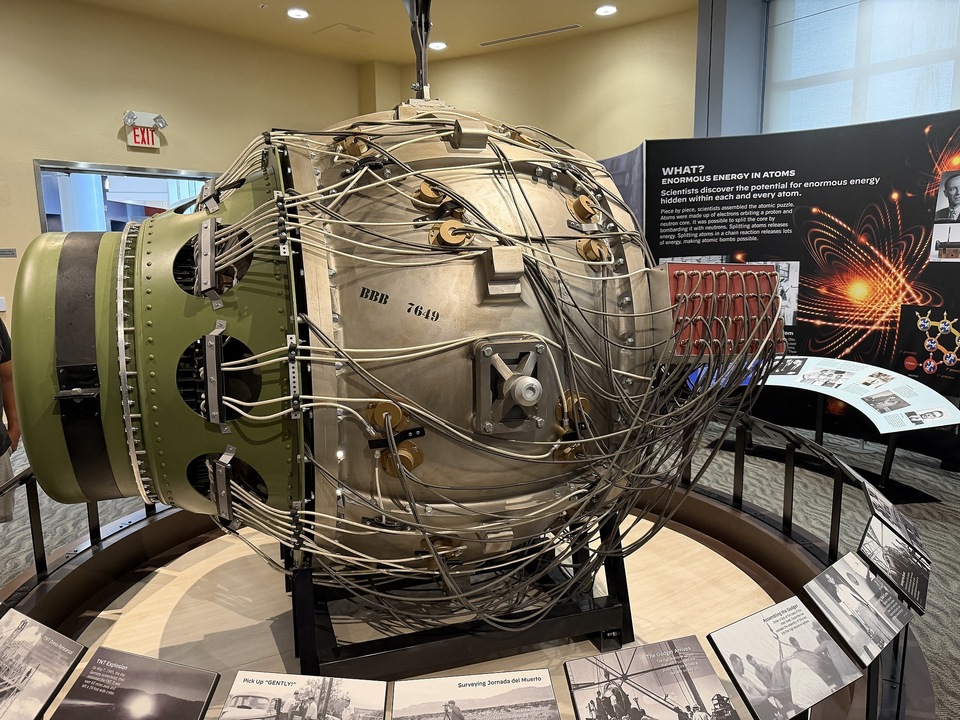
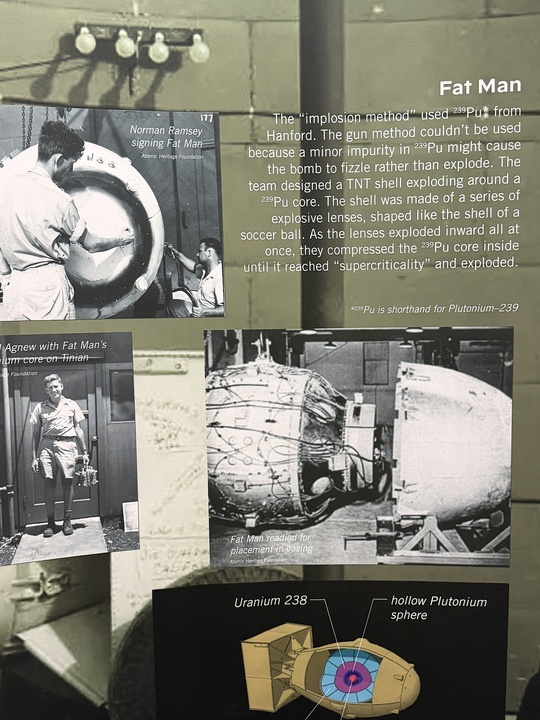
After an introduction to the basics of nuclear fission, the exhibit moved on to the details of the Manhattan Project. As we recall: During World War II, Germany and Japan attacked the rest of the world and were almost unstoppable, and the Americans launched a research project to build a new type of bomb with devastating destructive power. The result was the atomic bomb "Little Boy," which the Americans dropped on the Japanese city of Hiroshima (Rundbrief 06/2002). The consequences were disastrous: 100,000 dead and a completely destroyed city. Something similar happened with the second bomb ("Fat Man") over Nagasaki three days later, and the Japanese surrendered.
The museum devotes little attention to the entirely legitimate question of how far this concentrated destruction was morally justified. The exhibition clearly focuses on technical aspects such as bomb design, further development, and testing procedures. And, of course, America has a different view of World War II than, for example, Japan, as we learned many years ago during a visit to a museum in Hiroshima. There, the story was that Japan had been dragged into the war by adverse circumstances. Well, opinions differ on that!
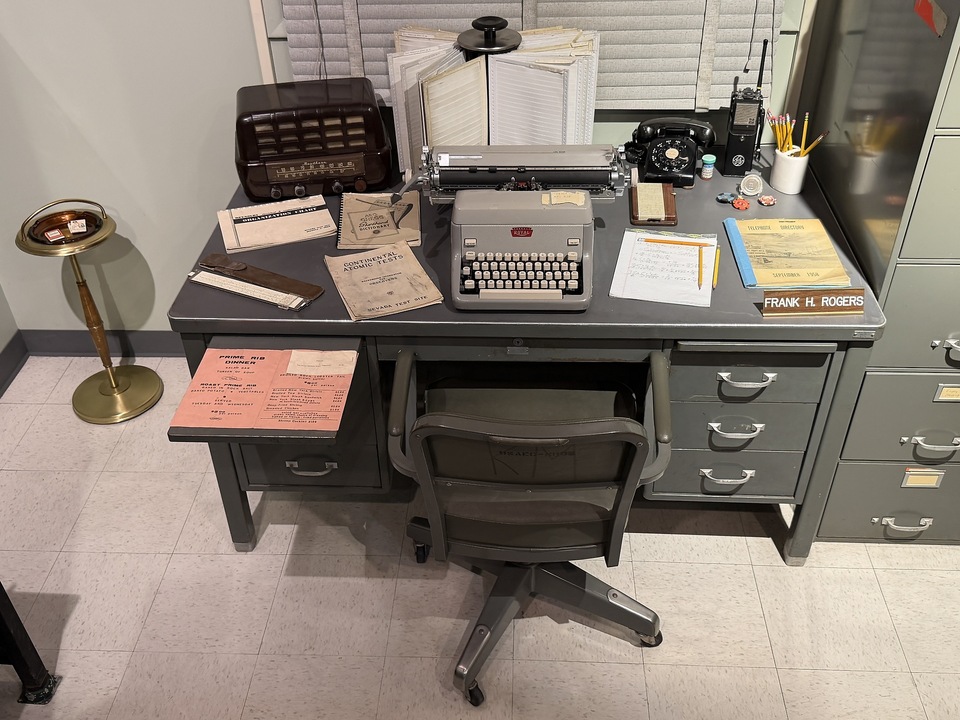
In any case, I can recommend the museum to any technology enthusiast. In the museum's own theater, you can experience a simulated atomic bomb explosion, complete with booming speakers and shaking benches. You should bring some background knowledge and an appetite for technology; otherwise, it might not be all that interesting.