MichaelIn America, the low-wage sector has disappeared in recent years. Here in California, the state-mandated minimum wage is currently $16.90, and in San Francisco it is as high as $19.61. That is good news for employees, who no longer have to work for five dollars an hour, but the side effect is that products involving service have become much more expensive.
For example, an espresso drink at a coffee shop here currently costs six dollars and up (in 2026), and over-the-top creations will probably soon break the ten-dollar barrier. Customers groan, and restaurant operators, no fools themselves, have recently stopped putting the full price on their menus, instead tacking absurd fees onto the bill at checkout.
Of course, Americans have always been used to paying more than the advertised price in the end. Businesses do not include sales tax in their prices, but add it to the bill later at checkout (Rundbrief 11/2011). And it does not stop there: Many businesses increasingly add the now-customary 20% restaurant tip to the bill automatically, leaving customers only the option of tipping *more* than 20% (Rundbrief 07/2021).
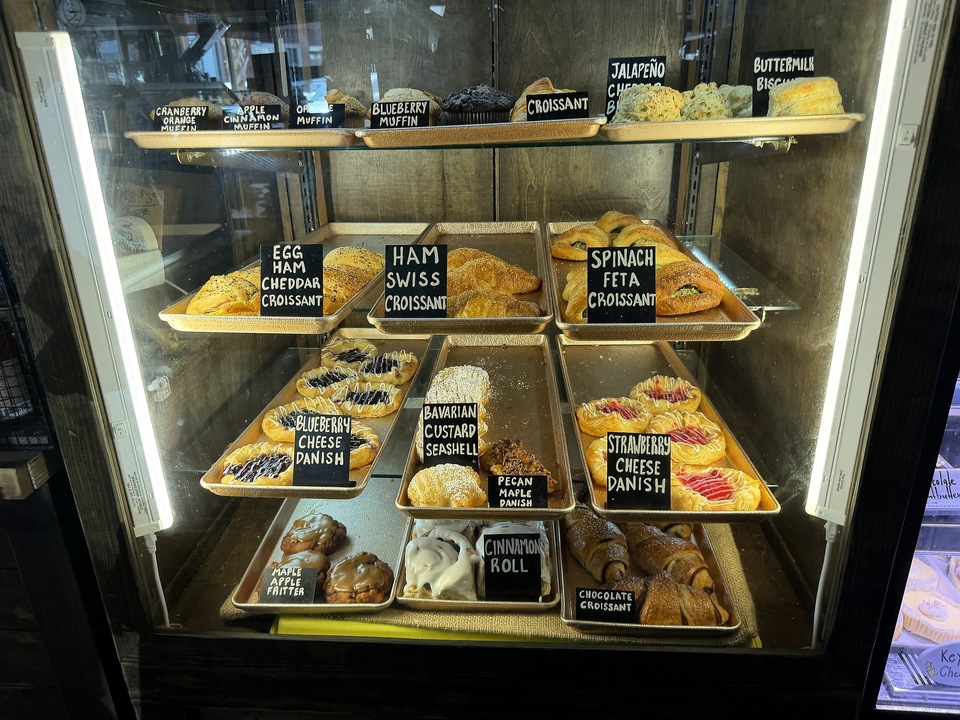
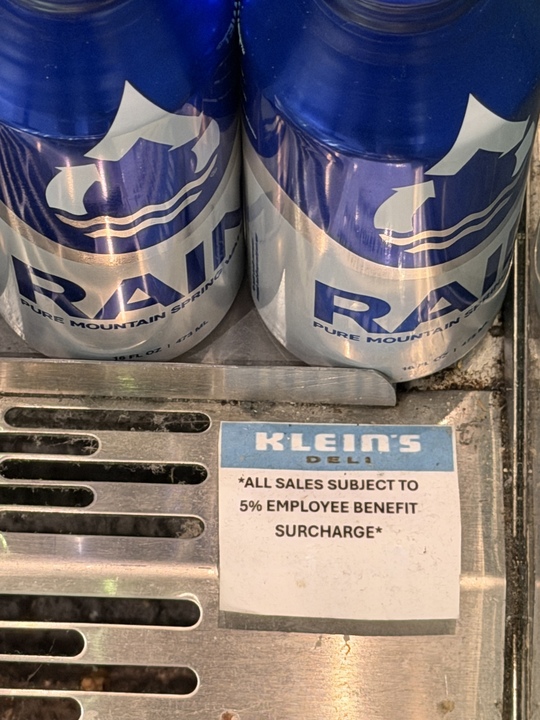
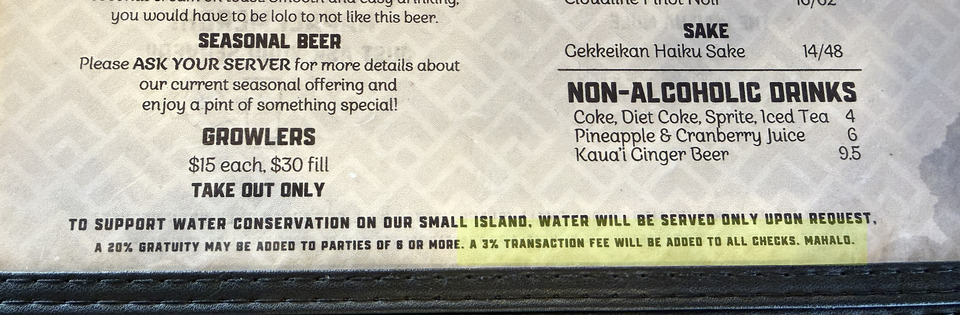
Then there are the recent made-up surcharges, such as an "Employee Surcharge," which is extracted from the surprised customer for no apparent reason (for example, 5% in Figure 3). This probably originated with restaurants passing their employees' health insurance costs on to customers (Rundbrief 05/2008), but has since become completely arbitrary. Many businesses now also pass card-processing fees on to customers who pay by card (Rundbrief 08/2026).
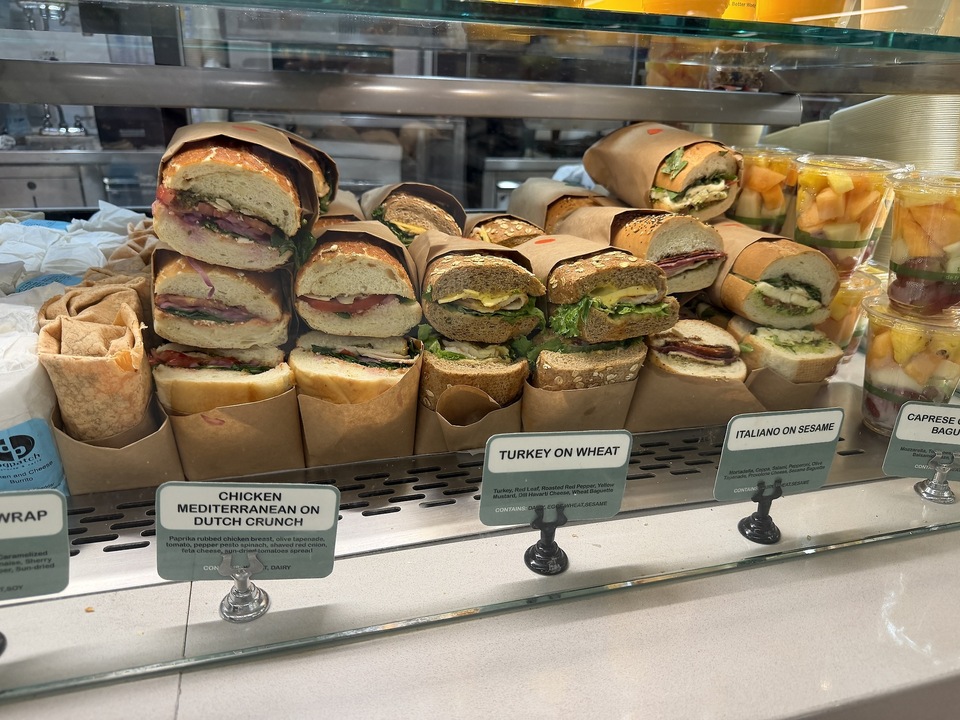
Some goods have also become so expensive that certain businesses no longer put price tags on them at all, leaving customers to pray that a reasonable amount will pop up at the register. I wonder how much the sandwiches in Figure 2 cost? Certainly more than ten dollars, or the price would be displayed. Now, I am no fan of government intervention in a functioning market, but the authorities ought to put a stop to this rip-off. In Germany, shops have to quote prices including value-added tax, too, rather than playing tricks at the register later.
|
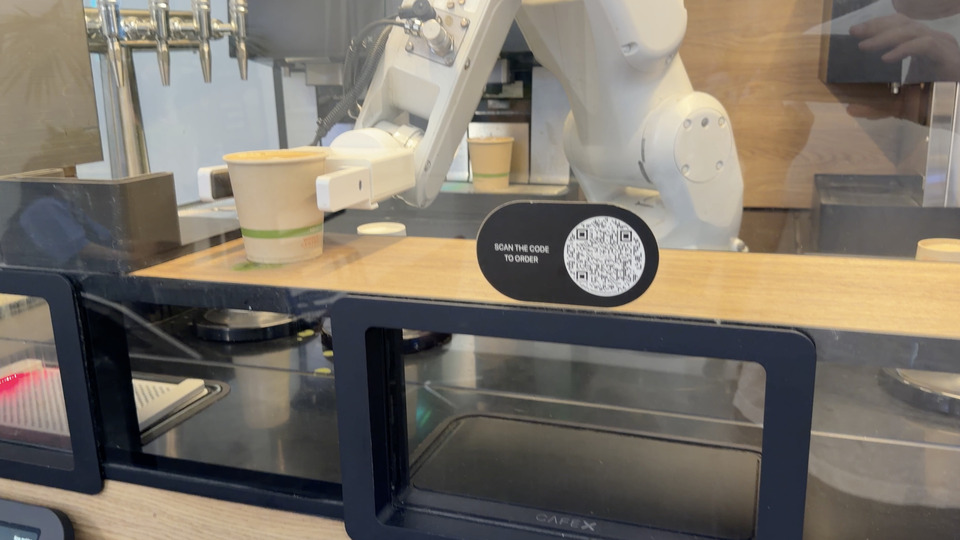
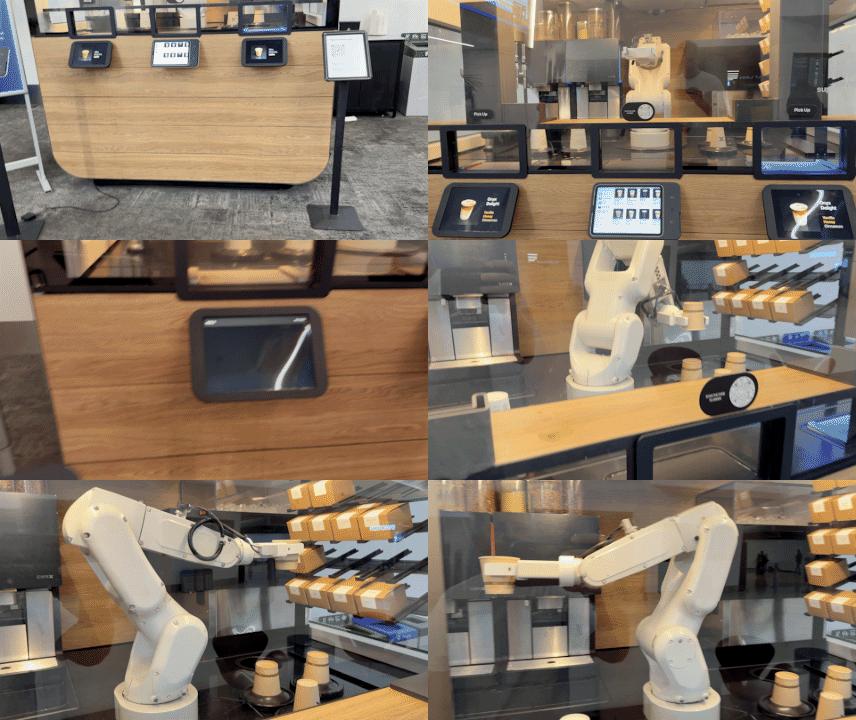
| The robot barista takes an order and gets to work. |
In any case, all this fee-grubbing and tip-begging really gets on my nerves. Whenever possible, I avoid businesses that pull these tricks. Recently at SFO airport, I discovered that a coffee stand once again wanted an extra 5% (Figure 3), but a few yards farther along there was a futuristic-looking booth where the coffee was made by a robot instead of a barista. After I entered my order on the kiosk's iPad and paid by credit card (without a fee), an industrial robot behind a thick pane of glass sprang into action. It picked up two paper cups in succession and placed each under a coffee machine, which then slowly dripped a latte macchiato and a cappuccino into them.
|
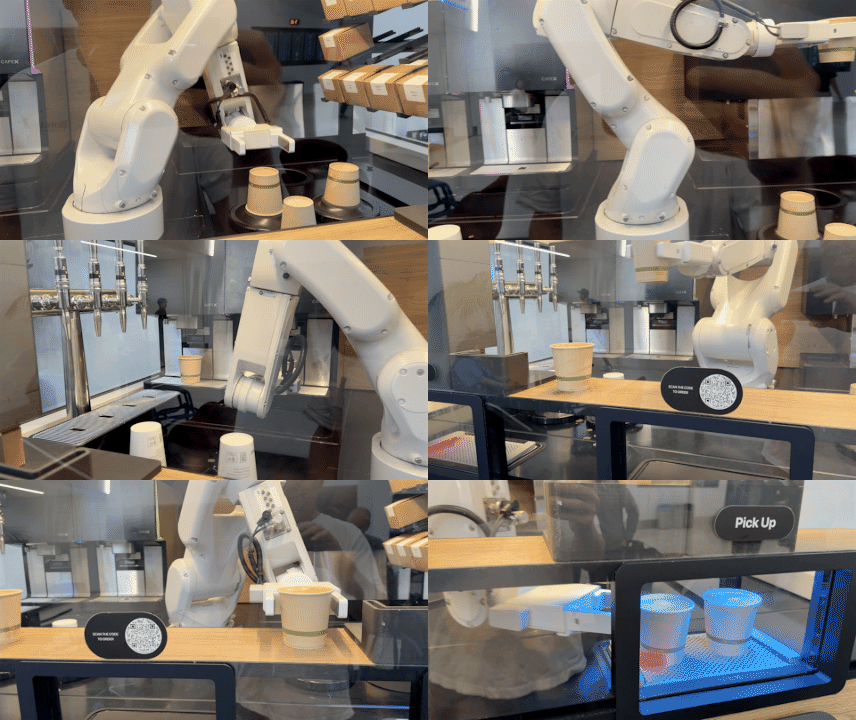
| The robot barista places the finished coffee drinks in the pickup compartment. |
The coffee was about as good as what you get from a fully automatic machine, so it was no match for a professionally prepared espresso drink. But okay, it is probably only a matter of time before the robot masters those simple movements, too. The robot arm then grabbed the filled coffee cups and placed them in the pickup compartment. After I tapped the name I had entered earlier on another iPad, a glass panel slid aside and I could collect the two coffees. The cups cost seven dollars each, roughly in line with the outrageous prices unfortunately customary at the airport. Naturally, the robot demanded neither employee surcharges nor health insurance contributions, and it did not beg for a tip either.