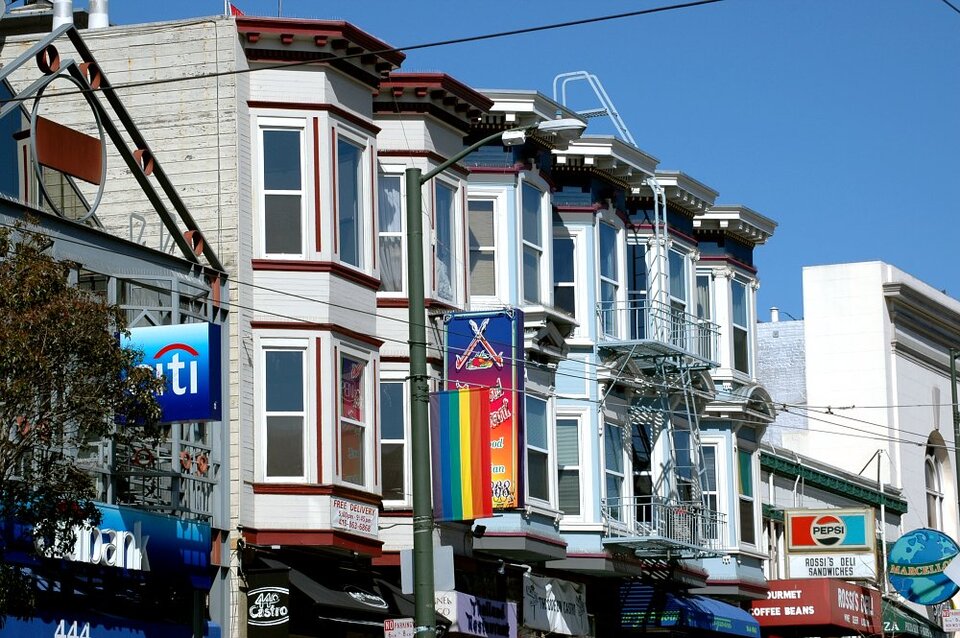
Angelika Every year at the end of June, the so-called "Gay Pride" festivities take place in San Francisco. With pride (hence the name "Pride") and in a colorful manner, the gay and lesbian movement of this city celebrates itself, and everyone joins in the festivities. The city is awash with a sea of rainbow flags (the symbol of the movement), and hotel rooms are hard to come by because everyone travels to San Francisco for the big party. One of the highlights of the festivities is the parade on Sunday, where decorated floats, people in costumes, activists, and politicians, including the mayor of San Francisco, are marching down Market Street. A classic feature is the "Dykes on Bikes," who traditionally open the parade with their heavy motorcycles, often topless. The "Dyke March," organized by lesbian women for (lesbian) women, is also very popular and begins with bands and speeches in Dolores Park. From the park, the march proceeds to the Castro District, where everyone (regardless of their sexual orientation) dances late into the night on Castro Street at the unofficial party "Pink Saturday."
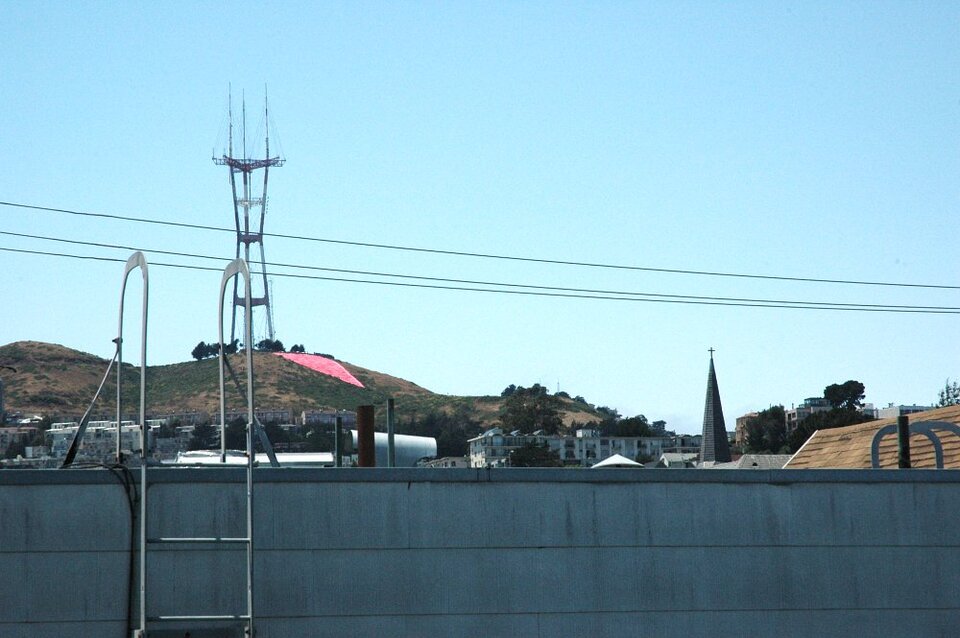
And the large pink triangle, which is installed for a few days on the Twin Peaks hill high above the city, has now become a permanent part of the program. The pink triangle, which in Nazi Germany stood for the massive persecution and discrimination of homosexuals, has now become a more positively embraced international symbol of the gay movement. You might remember from history class that homosexuals had to wear the inverted triangle visibly on their clothing in concentration camps. The triangle on Twin Peaks hill is meant to ensure that historical and current discriminations are not forgotten. This year, Consul Rolf Schütte from the German Consulate General in San Francisco gave the speech at the annual opening ceremony of the triangle installation. It couldn't have been more symbolic, as Schütte is not only the German consul, but also openly homosexual.